When people picture landscape lighting, they usually think of one thing: a row of path lights along the walk. A good design does much more than that. It layers several different fixtures, each doing a different job, so the yard has depth instead of a flat line of dots. Here’s a plain-language run through the main types of low-voltage landscape lighting and what each one is best at, so you can picture what your own property needs.
Up-Lights
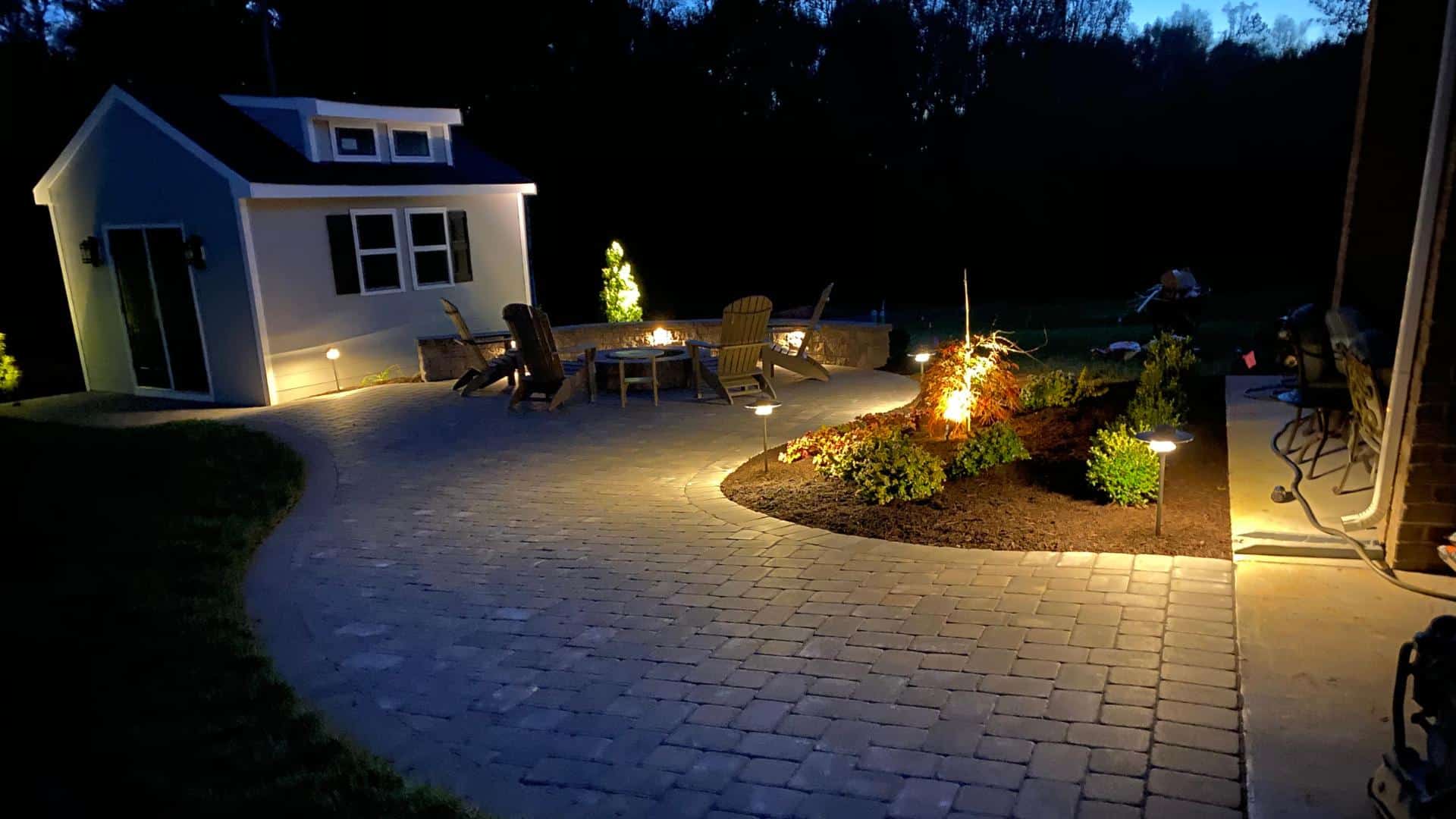
Up-lights sit low to the ground and aim upward to light a tree, column, or feature from below. This is the workhorse of a good design and the reason to light a yard at all in many cases. A mature tree that disappears at sunset becomes the centerpiece of the front yard once it’s uplit. You can adjust the width and brightness so a tall oak, a magnolia, and a small ornamental each get the effect that suits them.
Path Lights
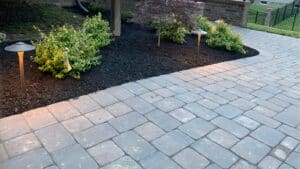
Path lights are short fixtures that cast light down and to the side onto walkways, steps, and bed edges for safety and a welcoming look. Spaced and staggered along a walk, they guide guests to the door without glare. These fixtures are visible up close, so style matters as much as function.
Spotlights and Floodlights
Both point light at a target, and the difference is the beam. Spotlights throw a narrow, focused beam for highlighting a single feature, while floodlights spread a wider wash to cover a larger area like a broad facade or a section of yard. A designer mixes the two to control where the eye goes.
Well Lights and In-Ground Lights
Well lights sit flush in the ground so the fixture itself disappears and only the light shows. They’re a clean way to uplight trees, walls, and architecture when you don’t want hardware visible during the day. One note: they work best on trees and structures rather than low flower beds, since plants can grow over the lens and block the light.
Downlighting and Moonlighting
Downlighting flips the up-light idea. Fixtures mounted high in a tree or under an eave cast a soft light downward, and when placed high in a tree it mimics natural moonlight, throwing gentle shadows from the branches onto the ground. It’s a beautiful effect over a patio, a seating area, or a path, and it feels far more natural than a bright fixture at eye level.
Wall Washing and Grazing
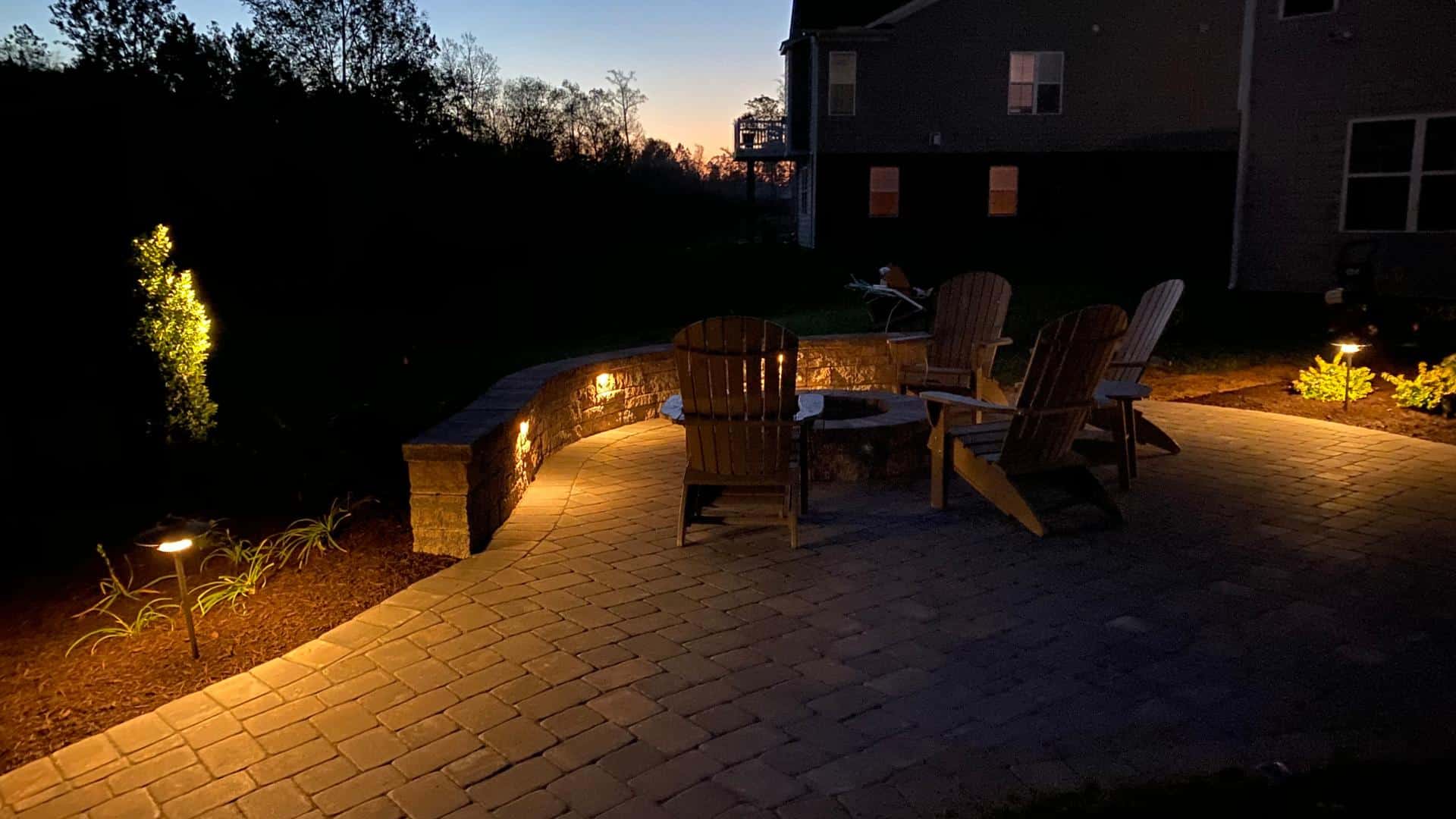
These two shape light against a flat surface. Washing lays an even, soft light across a wall or hedge from an indirect angle, while grazing places the light close and rakes it across a textured surface like a stone wall or brick to bring out the texture. Both add a layer of background glow that ties a design together.
Step and Deck Lights
Built into steps, walls, or deck framing, these light stairs and edges for safety while accenting the architecture. They’re small, but they prevent the missed-step moment on a dark deck and give hardscape features a finished look at night.
How the Types Work Together
No single fixture makes a yard look designed. The effect comes from layering: uplight the trees, wash the front of the house, run path lights along the walk, and add a downlight or two over the patio. Start with the features that matter most to you, then build outward. Because a low-voltage system runs off one transformer, it’s straightforward to add fixtures and types over time.
Green Side Up designs and installs low-voltage systems for homes across Richmond and Williamsburg, and because our leadership is trained in horticulture and turf, fixtures get placed around your plantings in a way that works as they mature. When you’re ready, our landscape lighting cost guide lays out the numbers, and you can schedule a meeting for a free estimate.
Frequently Asked Questions
Which type of landscape lighting adds the most curb appeal?
Uplighting on the trees and the front of the house usually does the most visible work, since it gives the property height and drama after dark. Path lights and downlighting round it out for safety and warmth.
Do I need all of these types?
No. Most homes use a handful, commonly up-lights, path lights, and a downlight or two. A design picks the types that fit your features rather than using every one.
Are these all low-voltage and safe around the yard?
Yes. Green Side Up installs low-voltage systems that run at 12 volts off a transformer, which carries far less risk than standard household current and is the residential standard.
What’s best for the big trees common in Richmond and Williamsburg?
Mature oaks, magnolias, and crepe myrtles are made for uplighting, and tall trees also take well to moonlighting from a downlight set high in the canopy. Both are where our local tree cover pays off most at night.
Can I start with a few types and add more later?
Yes. Because everything runs off one transformer, you can begin with the front of the house and add path lights, downlights, or step lights in a later phase without redoing the system.
About the Author

Bill Gallagher is an Owner and Sales Manager at Green Side Up Landscaping, bringing decades of hands-on experience in construction and turf management to the team. Bill’s career began building golf courses with M.S. St. Clair in Williamsburg before earning an Assistant Superintendent position at the prestigious Country Club of Virginia — and later playing a key role in the 2005 renovation of the Manakin Golf Course at Hermitage Country Club. That foundation of high standards and attention to detail is exactly what he brings to every Green Side Up client relationship today.