
A new patio almost always starts with the same decision: pavers or poured concrete. Both give you a solid outdoor surface, but they age very differently, especially through Central Virginia’s freeze-and-thaw winters. Here’s a straight comparison on cost, looks, durability, and upkeep so you can decide which one belongs in your backyard.
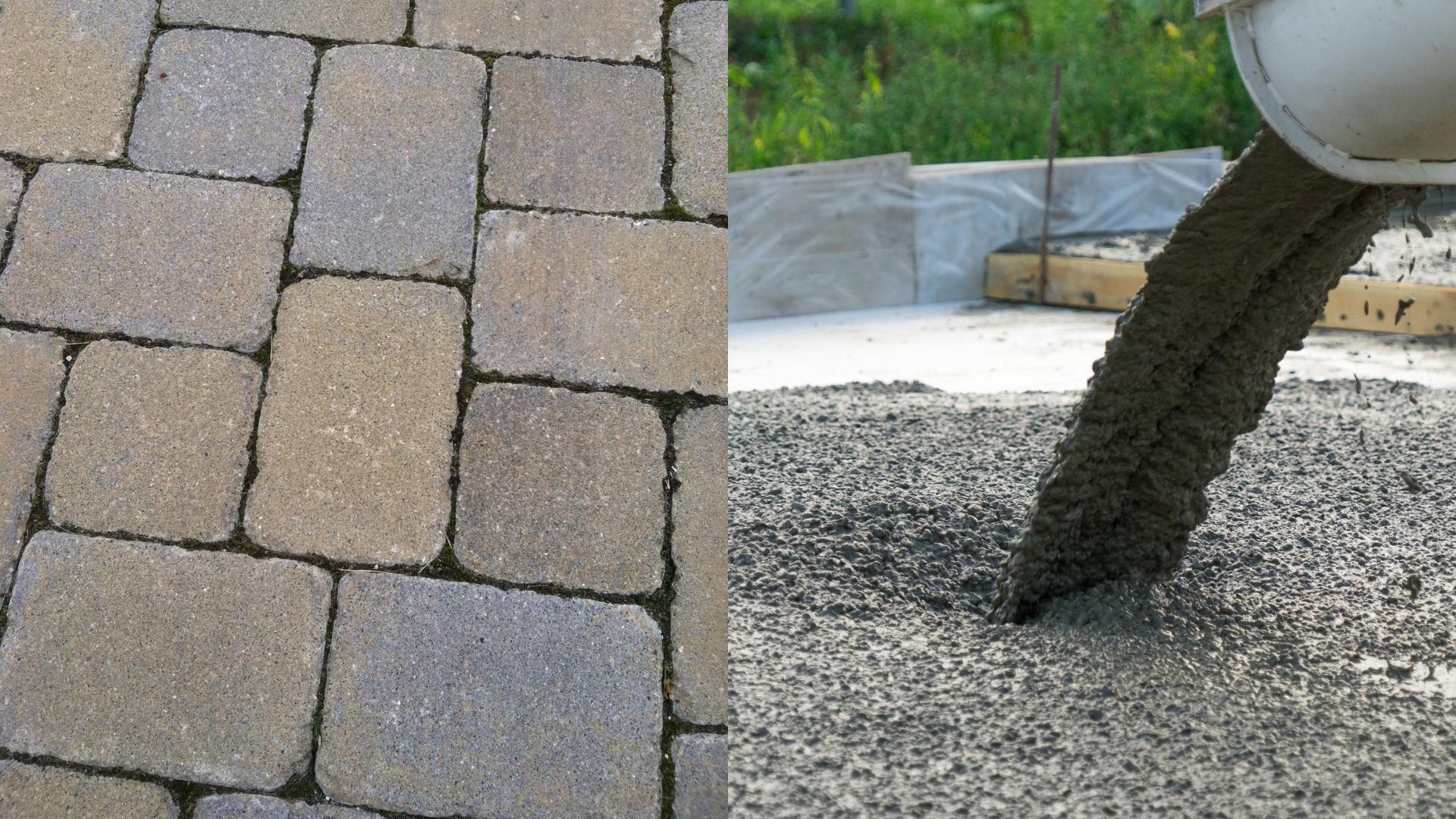
Cost: Concrete is Cheaper Up Front
There’s no way around it. Poured concrete costs less to install. Concrete patios run roughly $4 to $15 per square foot, while paver patios land around $12 to $30 per square foot installed. On a mid-size patio, that gap is meaningful at the start.
The picture shifts over time. Concrete cracks and patches show, and a tired slab often gets torn out and replaced. Pavers are repaired by lifting and resetting individual units, so the surface keeps looking sharp for years. Over a decade of ownership, the cost difference narrows once repairs enter the math, and the paver surface still looks new while the concrete looks tired.
Durability: Where Virginia Weather Matters
Central Virginia swings through freeze-thaw cycles all winter. Water gets into concrete, freezes, expands, and works on every control joint and hairline crack. A poured slab is one big rigid piece, so when the ground moves, it cracks, and once it cracks, the fix is cosmetic at best.
Pavers behave differently. They sit on a flexible base of compacted gravel and sand, with dozens or hundreds of individual units and joints that absorb that movement instead of fighting it. If a section settles, you reset that section. Our local clay soil makes this matter even more, because clay holds water and shifts, and a flexible paver system handles that better than a rigid slab. Good base prep and drainage are what separate a patio that lasts from one that heaves.
Looks and Design Flexibility
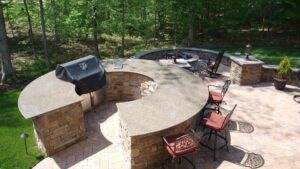
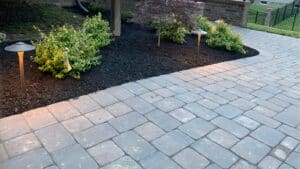
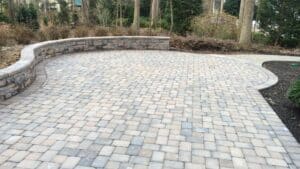
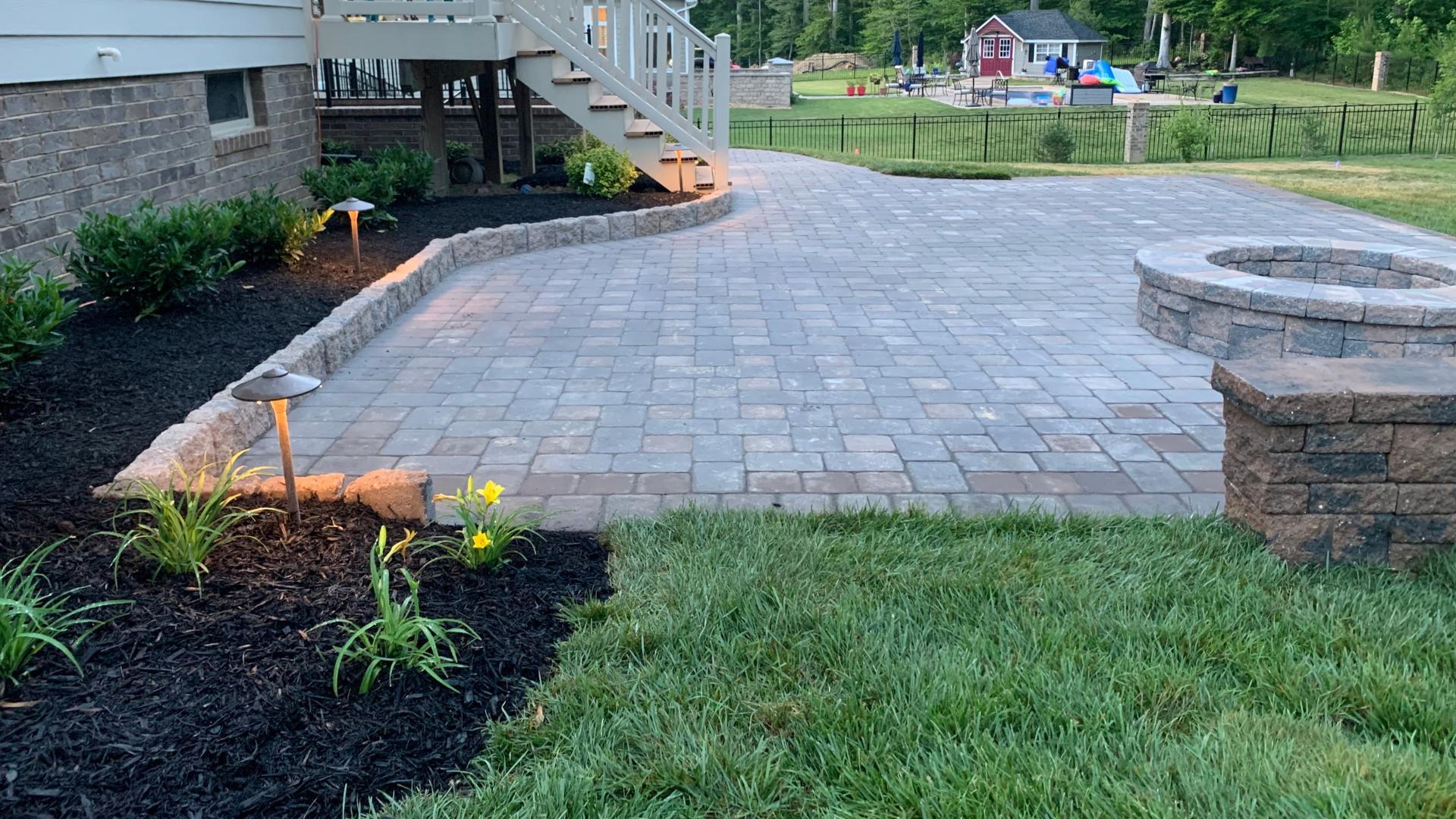
Pavers win on options. They come in a wide range of colors, shapes, and textures, and they can be laid in patterns, curves, borders, and multiple levels. You can also match or complement the brick on your house.
Concrete is more uniform. You can stamp or stain it to mimic stone or add color, which closes some of the gap, though stamped concrete still cracks like any slab, and the patterns can look repetitive over a large area.
Maintenance and Repairs
Concrete asks for periodic sealing and crack repair, and there’s no clean fix once cracks spread. Pavers ask for occasional joint-sand top-ups and the odd weed pulled from a joint, and any stained or damaged paver lifts out and gets swapped without touching the rest.
So Which Should You Choose?
For a budget walkway, a utility pad, or a surface you won’t look at much, poured concrete is a reasonable, lower-cost pick. For a patio you want to enjoy and show off, one that has to ride out Virginia winters and hold its value, pavers are usually the better long-term choice. They cost more to install and pay you back in looks, repairability, and resale appeal.
Green Side Up builds paver patios for homeowners across Richmond and Williamsburg, and we plan the base and drainage around our local soils so the patio sits right for the long haul. Want a number for your yard? Schedule a meeting for a free estimate, and read our advantages of paver patios write-up if you’re leaning that way.
Frequently Asked Questions
Do pavers crack in Virginia winters?
Individual pavers are very freeze-thaw resistant, and because the system flexes on a gravel-and-sand base, it handles winter ground movement far better than a rigid concrete slab. Most problems trace back to base prep, not the pavers.
Which adds more value, pavers or concrete?
A well-built paver patio generally reads as a higher-end feature to buyers and holds its appearance longer, which supports resale better than a plain or cracked concrete slab.
Are paver patios slippery?
Most concrete and stone pavers have textured surfaces with good grip. If slip resistance is a concern near a pool, your installer can point you toward a textured finish.
Do I need a permit for a patio in Central Virginia?
A ground-level patio often doesn’t, but rules vary by locality and HOA, and add-ons like a retaining wall over a few feet or a future outdoor kitchen can trigger a permit. Check with your county before you build.
About the Author

Jim Gallagher is an Owner and Sales Manager at Green Side Up Landscaping, with a Turf Management degree from Virginia Tech and a career built on some of the most complex landscaping and construction projects in the region. From helping build the Woods Course at Kingsmill to serving as Head Golf Course Superintendent at Mattaponi Springs Golf Club — where he oversaw full course construction, drainage, and irrigation — Jim has done it all. He went on to serve as Vice President of a landscaping company that grew to 40+ employees, and now channels that leadership experience into making Green Side Up the best in the business.