
Most homeowners want one thing first when they start pricing landscape lighting: a number. Across the U.S., a professionally installed system runs about $2,000 to $6,000, with the average landing near $3,500, and individual fixtures cost roughly $100 to $300 each installed. Closer to home, a starter Green Side Up system begins at $1,800, and we break down exactly what that covers below.
What a Landscape Lighting System Costs with Green Side Up
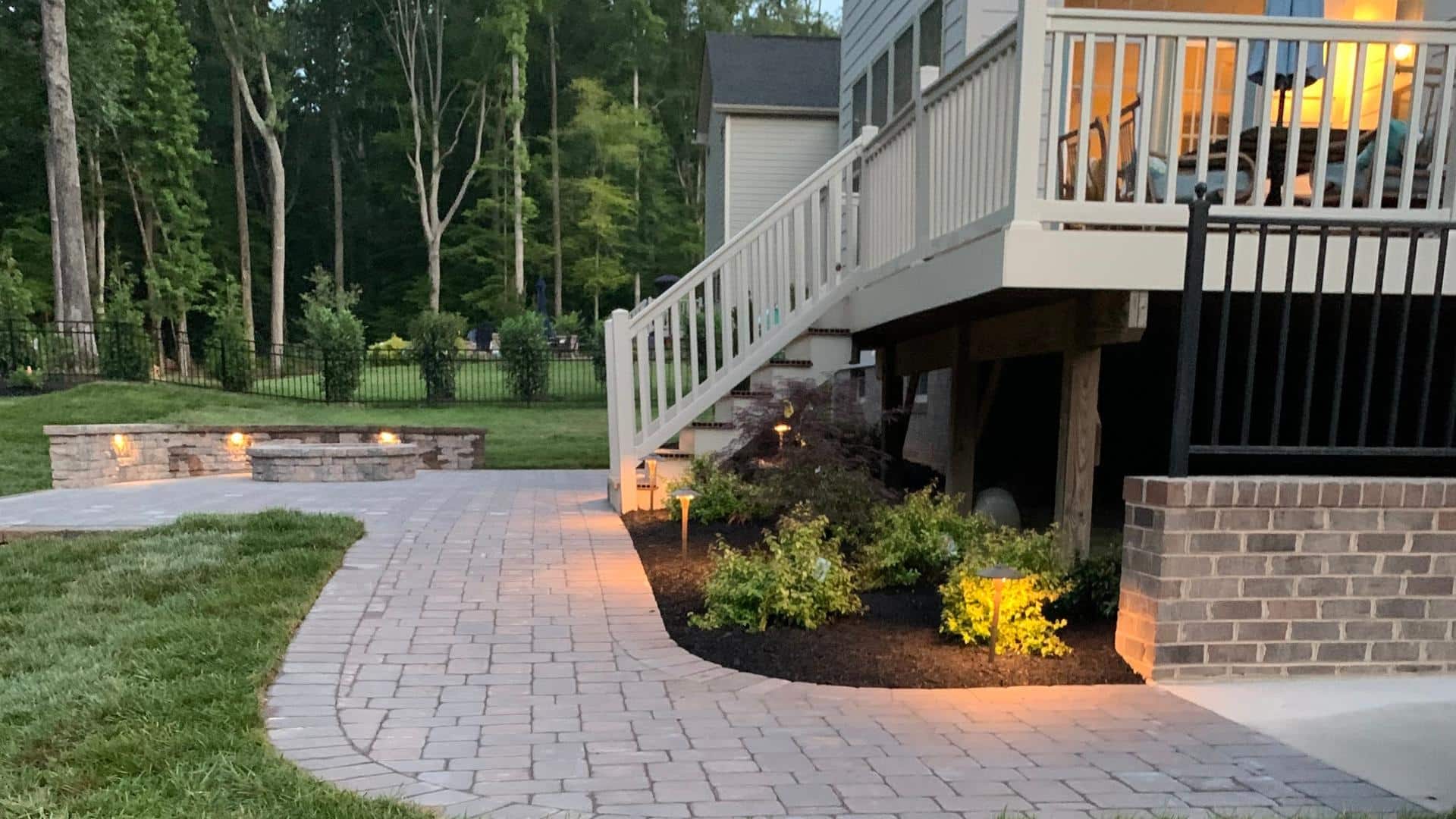
A starter Green Side Up system begins at $1,800. That covers six low-voltage up-lights or path lights, a 150-watt transformer, and the wire to hook everything up. It’s enough to light an entryway and a couple of feature trees, or a front walkway, with room left on the transformer to grow.
From there, the system scales with your yard. Every one to three standard up-lights or path lights you add runs $175 to $525, depending on the fixtures and where they go. So you can light the front of the house this season and extend to the beds, walkways, and back yard later, all without replacing the transformer.
Larger or more detailed designs move past the starter range. Specialty fixtures, heavy tree canopy to work around, long wire runs, or smart controls all add to the figure, which is why we price each yard with a free estimate.
What Drives the Price of Landscape Lighting
Five things move the number more than anything else.
Fixture count. Every light adds materials and labor. A front-walkway accent job needs far fewer fixtures than a whole-property design that lights the house, trees, beds, and pathways.
Fixture type and quality. Cast brass and copper fixtures cost more than aluminum or plastic, and they hold up far longer outdoors. Path lights, well lights, spotlights, and downlights each carry different price points.
Wiring, transformer, and trenching. A low-voltage system runs on a transformer that steps your home’s power down to 12 volts, then feeds buried wire to each fixture. Digging through mature beds, under walkways, or across long runs adds labor.
Site access and slope. Tight side yards, established plantings, and graded lots take longer to work in, which raises the labor portion.
Controls and design. Timers, photocells, smart-home control, and zoning let you run different areas on different schedules. More zones and more control mean more cost.
How Professional Installation and LED Change the Math
Ten years ago, landscape lighting meant halogen bulbs that ran hot and burned out fast. LED fixtures changed that. They draw about 75 to 80 percent less energy than the halogen equivalents, so a designed system adds very little to your electric bill while lasting years longer.
Upkeep is modest. Plan on about $100 to $400 a year for cleaning, occasional bulb swaps, and seasonal adjustments, with LED at the low end because the bulbs last so long.
A professional install also buys you design and placement. Aiming, beam spread, and fixture choice are what separate a yard that looks staged from one that looks like a string of driveway markers. This is where Green Side Up’s background matters: our leadership holds degrees in horticulture, turf management, and agronomy, so lighting gets placed around trees and plantings in a way that flatters them as they grow.
What Central Virginia Homeowners Should Plan For
Richmond and Williamsburg neighborhoods carry a lot of mature tree canopy, which is the best argument for uplighting. A single well-lit oak or crepe myrtle can do more for a front yard than a dozen path lights. Heat and humidity also reward better fixtures and gaskets, since cheap housings corrode and fog. If you’re in an HOA, check whether there are limits on brightness or fixture style before you design.
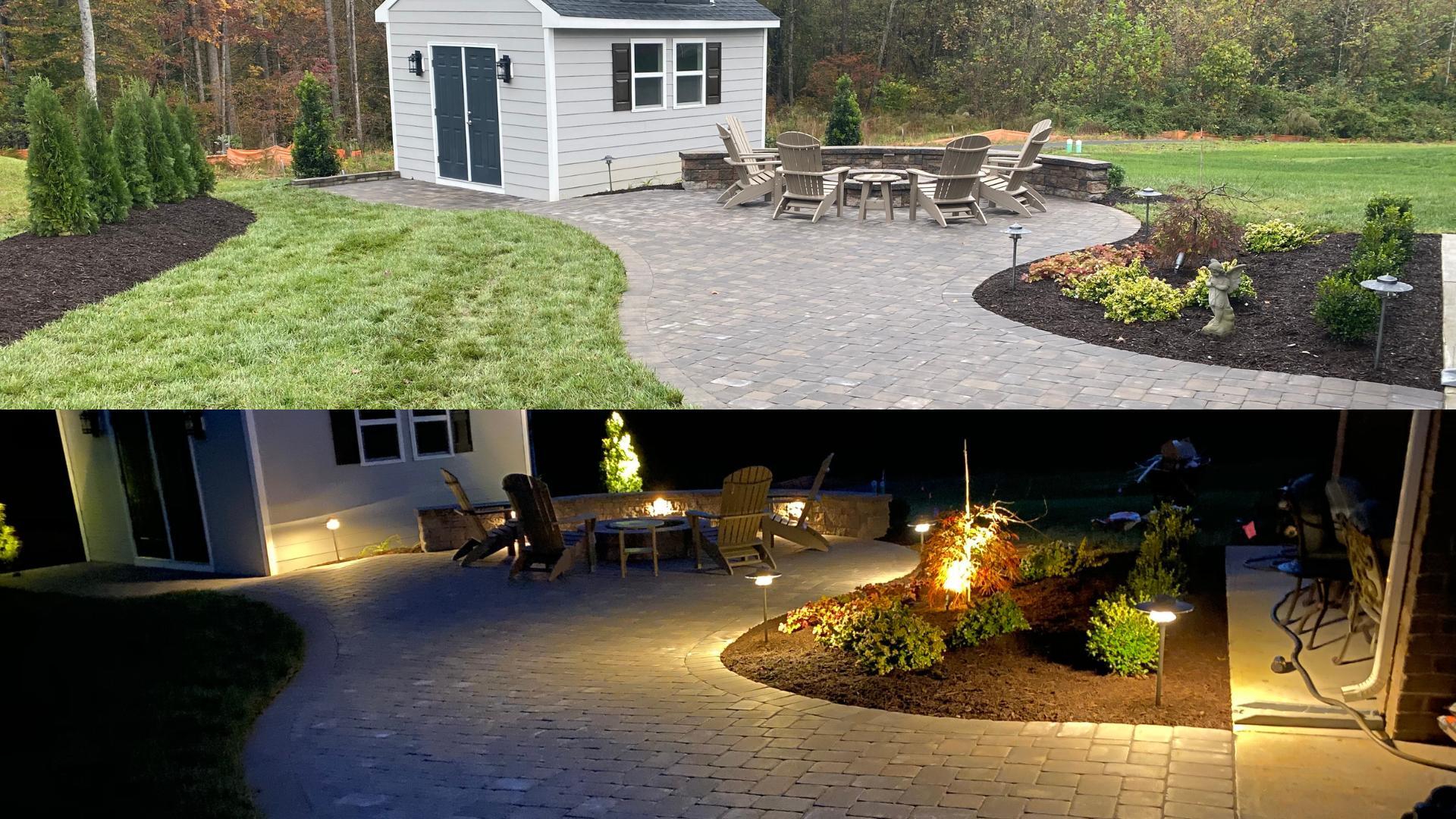
You don’t have to light the whole property at once. Many homeowners start with the facade and one or two feature trees, then add zones over a couple of seasons. To picture what your yard needs, our guide to the types of landscape lighting walks through what each fixture does.
Get a Number for Your Yard
The $1,800 starter is a beginning, not a quote. Your price comes down to your fixture count, your lot, and how much of the property you want lit. Green Side Up offers free estimates for homeowners across Richmond and Williamsburg. Schedule a meeting online to walk the yard with us and get an exact figure.
Frequently Asked Questions
What does a starter landscape lighting system cost?
A Green Side Up starter system begins at $1,800, which covers six low-voltage up-lights or path lights, a 150-watt transformer, and the wire to connect them. Adding more lights runs $175 to $525 for every one to three standard up-lights or path lights.
Is landscape lighting worth the cost?
For most homeowners, yes. It extends how long you can use the yard after dark, improves safety on steps and paths, and is one of the more visible upgrades you can make to the front of a home at night. It also tends to read as a high-end touch to buyers.
How long does a low-voltage LED system last?
The LED bulbs commonly run tens of thousands of hours, and quality brass or copper fixtures can last well over a decade outdoors. Wiring and transformers are built to live underground and outside year-round.
Will it raise my electric bill much?
Not by much. Because LED fixtures sip power, even a large designed system adds little to a monthly bill, especially when run on a timer for a few hours a night.
Can I add to my system later?
Yes, as long as the transformer has spare capacity. The 150-watt transformer in the starter system is sized to leave room, so you can grow the design without redoing the base.
About the Author

Bill Gallagher is an Owner and Sales Manager at Green Side Up Landscaping, bringing decades of hands-on experience in construction and turf management to the team. Bill’s career began building golf courses with M.S. St. Clair in Williamsburg before earning an Assistant Superintendent position at the prestigious Country Club of Virginia — and later playing a key role in the 2005 renovation of the Manakin Golf Course at Hermitage Country Club. That foundation of high standards and attention to detail is exactly what he brings to every Green Side Up client relationship today.