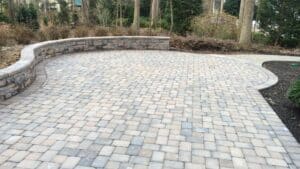

Most homeowners pricing a patio want the number first, so here it is. Across the U.S., a professionally installed paver patio runs about $12 to $30 per square foot. In Central Virginia, a Green Side Up paver patio for the most common sizes runs between $5,000 and $15,000, and we break that down by size below. Where your project lands comes down to the factors that follow.
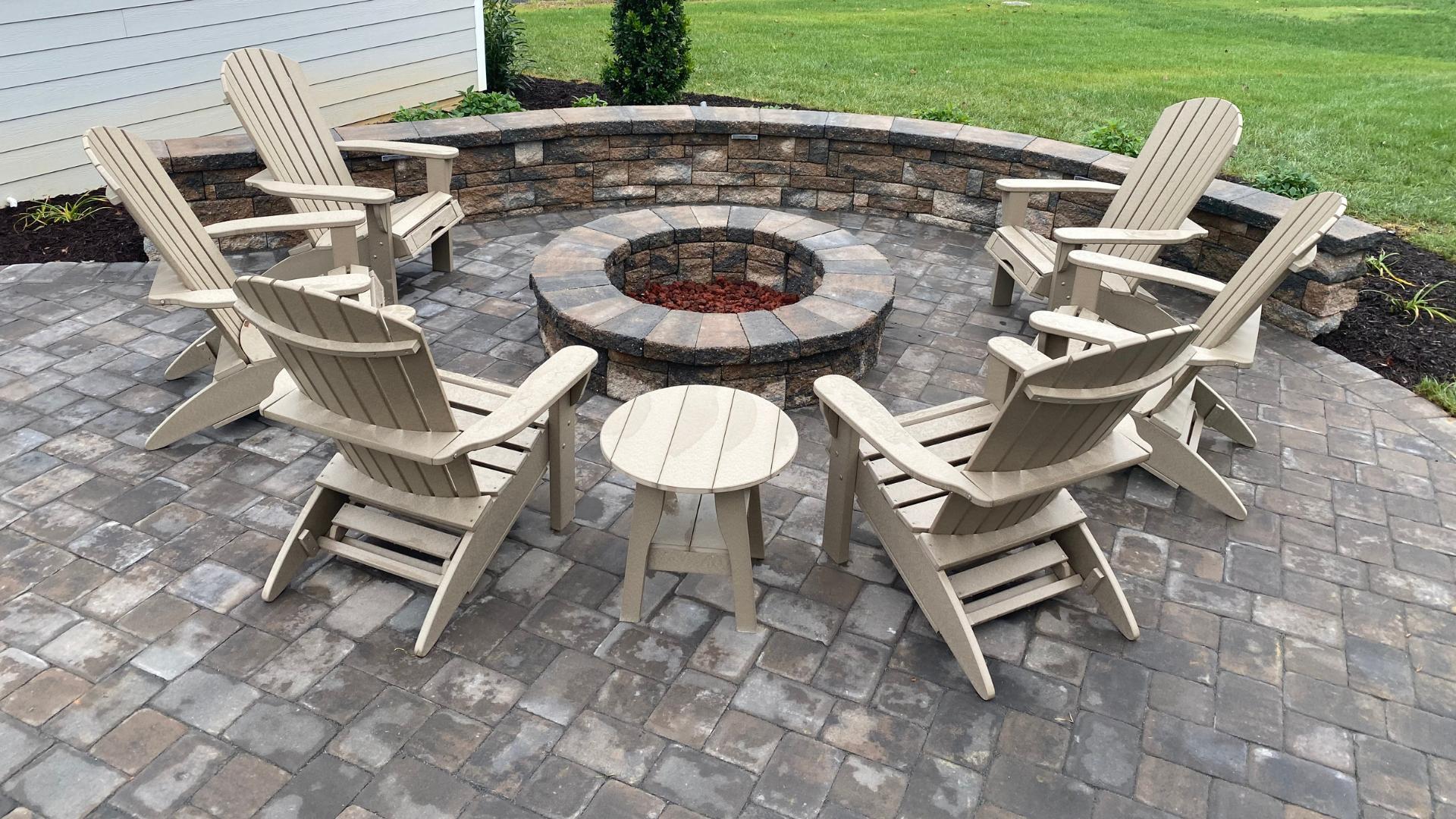
Paver Patio Cost by Size
Here’s how Green Side Up prices the most common patio sizes in Richmond and Williamsburg:
- 300 to 400 sq ft: $7,500 to $10,000. A comfortable patio for a dining set or a seating area.
- 400 to 500 sq ft: $10,000 to $12,500. Room for both dining and lounging, or a larger gathering space.
- 500 to 600 sq ft: $12,500 to $15,000. A full outdoor-living footprint.
The low end of each bracket works out to about $25 per square foot installed, with premium materials and detailed designs running higher. Patios under 300 square feet and large custom builds beyond 600 square feet fall outside these brackets and get priced on their own.
What Drives the Price of a Paver Patio
Size is the biggest lever. More square footage means more material and more labor, in a fairly straight line, which is what the brackets above reflect.
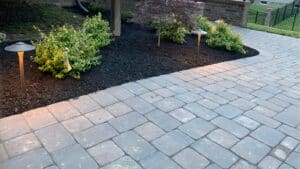
Paver material is next. Standard concrete pavers are the budget pick, clay brick sits in the middle, and natural stone runs the most. The jump from concrete pavers to natural stone can change the whole budget.
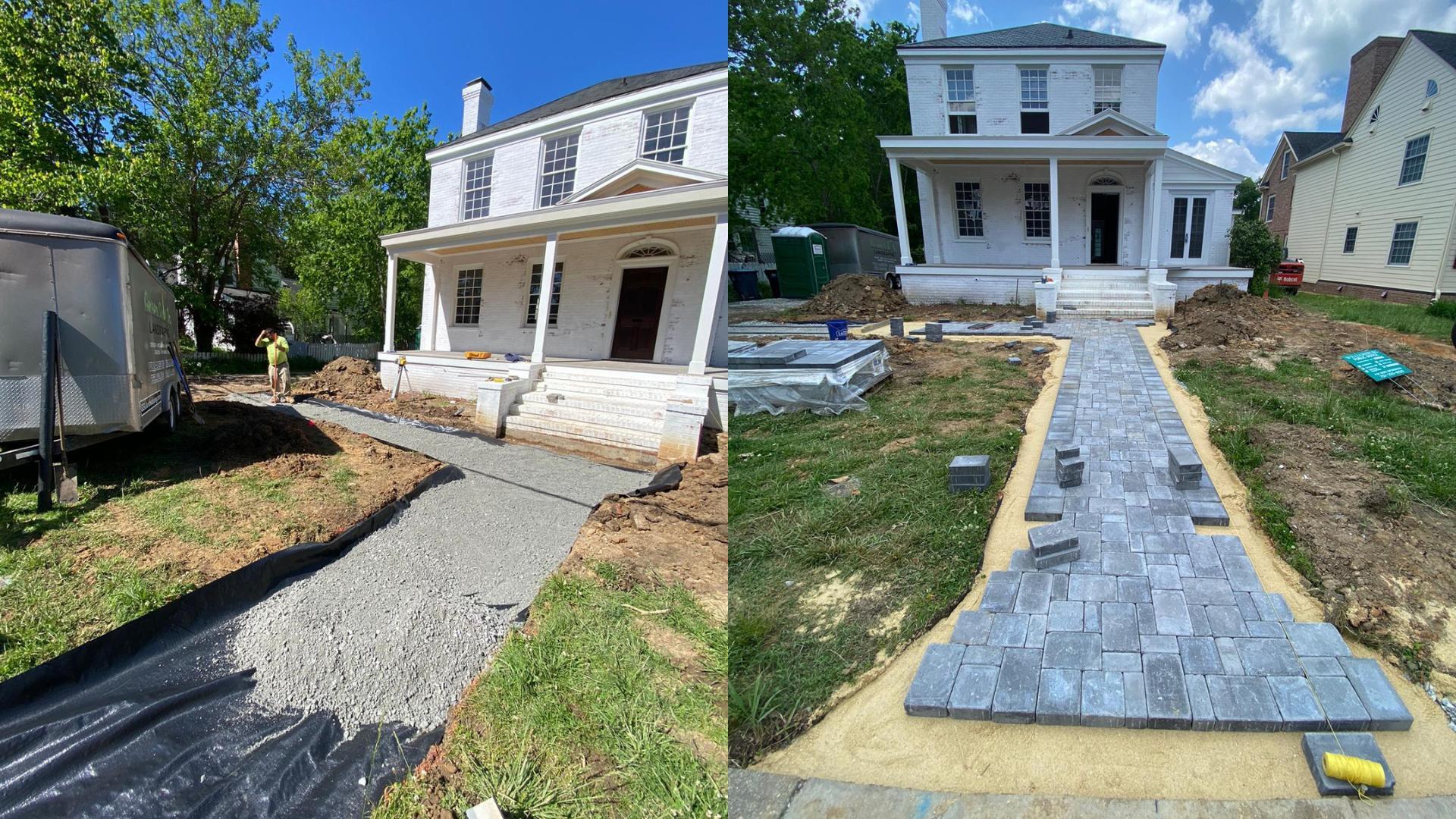
Site prep and drainage matter a lot in Central Virginia. Our clay soils hold water and shift, so a patio that lasts needs proper grading, a compacted gravel base, and somewhere for water to go. Cutting corners on the base is the most common reason patios heave and settle.
Design complexity adds up too. A plain rectangle on flat ground is the low end. Curves, borders, multiple levels, and intricate patterns take more cutting and more labor.
Access and conditions round it out. A tight backyard with no equipment access, a steep grade, or removing an old slab all push the price up.
Add-Ons That Change the Budget
A patio is often the base for a bigger outdoor space, and each addition has its own cost:
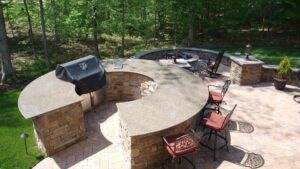
- Seat walls and retaining walls. Low walls for seating or grade changes commonly add in the range of $20 to $40 per square foot.
- A fire feature. A fire pit or fireplace is a popular add. Our fire pit vs. outdoor fireplace comparison breaks down the difference.
- Landscape lighting. Lighting the patio and beds extends how late you use the space. See our landscape lighting cost guide.
- An outdoor kitchen. The priciest common add, and one that usually calls for its own footings and planning.
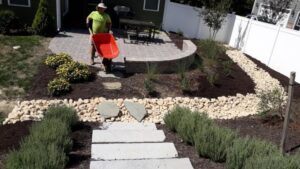
- Steps and walkways. Connecting the patio to the house with matching steps and paths adds material and labor.
Why Professional Installation Costs More, and Lasts Longer
You can find a cheaper number, but with patios the base is everything. In our clay soils, a patio is only as good as the grading, the compacted base, and the drainage underneath it. A pro install costs more because that hidden work is done right, which keeps the surface flat and stable for decades instead of heaving after a couple of winters. We get into the full reasoning in our look at why Green Side Up costs more than the cheapest quote. It also tends to beat a poured slab on looks and long-term value, which we cover in our pavers vs. concrete comparison.
Get an Exact Figure for Your Patio
The brackets above are a strong starting point, not a quote. Your price depends on your square footage, the paver you pick, your site, and any add-ons. Green Side Up offers free estimates for homeowners across Richmond and Williamsburg. Run a ballpark with our online estimator, or schedule a meeting to get an exact figure for your yard.
Frequently Asked Questions
How much does a 300-square-foot paver patio cost near Richmond?
A 300-square-foot patio falls in our 300-to-400-square-foot range, which runs $7,500 to $10,000 in concrete pavers. Natural stone, borders, or a difficult site push it higher. A free estimate pins down your number.
Is a paver patio cheaper than concrete in the long run?
Up front, concrete is cheaper. Over a decade, the gap narrows once you factor concrete’s cracking and replacement against pavers holding their look. See our pavers vs. concrete guide for the full breakdown.
Does a patio add value to my home?
A well-built patio is one of the more visible outdoor upgrades for resale, since it reads as usable living space. Pavers in particular tend to hold their look and appeal over time.
Do I need a permit for a paver patio in Central Virginia?
A ground-level patio frequently doesn’t, but it varies by locality and HOA, and a tall retaining wall or a future outdoor kitchen can trigger one. Confirm with your county before building.
When is the best time to build a patio in Central Virginia?
Patios can go in nearly year-round here, with spring and fall the busy windows. Booking ahead of peak season usually means a shorter wait.
About the Author

Craig Attkisson is the Owner and General Manager of Green Side Up Landscaping, holding a B.S. in Agronomy and Horticulture from Virginia Tech. His passion for the outdoors started early — growing up on a Christmas tree farm and mowing baseball and soccer fields as a 10-year-old entrepreneur. That foundation led to hands-on experience at Hanover Country Club, followed by a unique opportunity during his time at Virginia Tech to study abroad in South Africa, researching cultural diversity, climates, agrometeorology, and large-scale irrigation. After returning to the U.S., Craig built his expertise across all three Country Club of Virginia golf courses before becoming Second Assistant Superintendent at Hermitage Country Club. In 2004, he channeled that deep-rooted knowledge into founding Green Side Up Landscaping — with a singular focus on delivering the best lawn care and landscaping service possible to every client.