Richmond sits on the Fall Line, where the Piedmont’s red clay meets the Coastal Plain’s sand. Most yards west of I-95 have clay that holds water and packs down hard. Most yards east of I-95 have sand that drains fast and dries out by August. Which soil you have shapes how you water, what you plant, and how you care for the lawn.
Where the Fall Line Crosses Richmond
The Fall Line is the reason the James River has rapids downtown. In Richmond, the zone is about seven miles wide, starting at Bosher’s Dam and ending near Mayo Island, where the river drops to sea level. Interstate 95 roughly marks the boundary between the two soil types.
West of that line, the West End, Short Pump, Glen Allen, Midlothian, and Goochland sit mostly on Piedmont clay. East of it, Church Hill, eastern Henrico, and Mechanicsville sit closer to Coastal Plain sand. Yards near I-95 can have both. In newer subdivisions, builders often strip the topsoil during grading, so a new lawn may be growing in packed subsoil on either side of the line.
Red Clay: West of I-95
Piedmont clay is fine-grained and dense. The good news is that clay holds water and nutrients well. The trouble is that it holds them too tightly. Rain puddles on the surface, roots stay shallow, and foot traffic and mowers press the soil into a hard crust that grass roots can barely get through.
Clay gets better with steady work over several seasons.
Aerate Every Fall
Core aeration pulls plugs of soil out of the lawn and opens channels for air, water, and roots. We pair it with overseeding as part of our lawn care in Richmond, since fall is when tall fescue fills in best.
Add Organic Matter
A thin layer of compost spread across the lawn, called topdressing, works its way into the aeration holes and loosens the clay a little more each year.
Amend the Whole Bed
A hole full of rich soil surrounded by clay fills with water like a bucket and drowns the roots. Mixing compost through the full bed gives roots room to spread.
Move Standing Water
If water pools after every storm, grading or a drainage fix does more than any amount of amendment.
Skip the Sand
Mixing sand into clay sounds like it should loosen it, but the fine clay fills the gaps between sand grains and leaves the soil harder than before.
Sandy Soil: East of I-95
Coastal Plain sand is the opposite problem. It drains fast, warms up early in spring, and digs easily. It also lets water and fertilizer wash straight past the roots, so plants run short on both by midsummer.
Sandy yards need help holding on to moisture.
Build Organic Matter
Compost gives sand something to hold water with, and the gains add up each year.
Mulch Every Bed
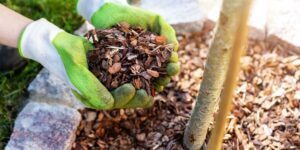
Two to three inches of mulch shades the soil and slows evaporation, which is a big part of why we mulch landscape beds every year.
Water Deeper and Less Often
A long soak pushes roots down to where the soil stays cooler. Light daily sprinkling keeps them at the surface, where August heat finds them first. A well-set irrigation system handles that timing for you.
How to Tell Which Soil You Have
Two quick tests in the backyard give you a good read:
- Squeeze test: Take a handful of moist soil and squeeze it. Clay holds its shape and smears into a ribbon between your fingers. Sand crumbles apart.
- Drainage test: Dig a hole about a foot deep, fill it with water, and watch. Water that disappears within an hour points to sand. Water still sitting there the next morning points to clay.
A lab test tells you the rest. The Virginia Tech Soil Testing Lab runs a routine test for about $10 and emails results within a few working days of receiving the sample. Kits are available from local Extension offices, and Henrico residents can also pick them up at county libraries or request a voucher that covers the fee. The report shows your soil’s pH and nutrient levels, which matters here because central Virginia soils tend to run acidic.
On our end, we pull a soil sample before we recommend any plants or turf work. Our owners hold degrees in horticulture, turf management, and agronomy, so the plan for your yard starts with the dirt it grows in.
What Grows Well in Each Soil
Clay-tolerant plants handle wet feet and dense soil. Good picks for Richmond’s clay include river birch, red maple, Virginia sweetspire, switchgrass, black-eyed Susan, and purple coneflower. Tall fescue grows well in clay as long as the lawn gets aerated each fall.
Sand-tolerant plants handle dry spells and lean soil. Wax myrtle, little bluestem, butterfly weed, blanket flower, and juniper all hold up east of I-95. Fescue struggles more in sand through July and August, so some homeowners there switch to zoysia or bermuda, both of which take summer heat better.
Either way, matching plants to the soil costs less than fighting it. Our landscape design process starts with what your yard already has, and our plant installation crews amend beds to fit the plants going in.
Frequently Asked Questions
Should I add sand to clay soil?
No. Sand mixed into clay makes the soil denser. Compost is the amendment that loosens clay over time.
How long does it take to improve clay soil?
Clay improves over several seasons. Yearly fall aeration and compost topdressing change the soil’s structure a little at a time, and most lawns show a difference within two or three years.
When is the best time to aerate a lawn in Richmond?
Fall. Tall fescue recovers and fills in fastest in cooler weather, so aeration and overseeding go together in September and October.
Plan Your Yard Around Your Soil
Request a free estimate from a Richmond landscaping company that tests the soil first. We’ll walk your property, pull a sample, and send a written proposal within 24 hours.
About the Author

Craig Attkisson is the Owner and General Manager of Green Side Up Landscaping, holding a B.S. in Agronomy and Horticulture from Virginia Tech. His passion for the outdoors started early — growing up on a Christmas tree farm and mowing baseball and soccer fields as a 10-year-old entrepreneur. That foundation led to hands-on experience at Hanover Country Club, followed by a unique opportunity during his time at Virginia Tech to study abroad in South Africa, researching cultural diversity, climates, agrometeorology, and large-scale irrigation. After returning to the U.S., Craig built his expertise across all three Country Club of Virginia golf courses before becoming Second Assistant Superintendent at Hermitage Country Club. In 2004, he channeled that deep-rooted knowledge into founding Green Side Up Landscaping — with a singular focus on delivering the best lawn care and landscaping service possible to every client.