
What Homeowners Say About Our Work



Your Driveway Project, Step by Step
01 | Schedule
Choose a convenient time to meet and fill out a few quick details about the services you're interested in.
02 | Prepare
Watch our short pre-meeting video, think through your budget, and explore our website to make sure we’re the right fit for your project.
03 | Meet
A member of our sales team will meet with you on-site to walk through your goals and explore the best options for your space.
04 | Approve
You’ll receive a detailed proposal within 24 hours. Once you approve it, we get straight to work.
05 | Enjoy
You’ll be connected with a dedicated point of contact who will guide you every step of the way—so you can sit back and enjoy landscaping you’re proud of!
Why Choose GSU?

The Base Carries the Weight
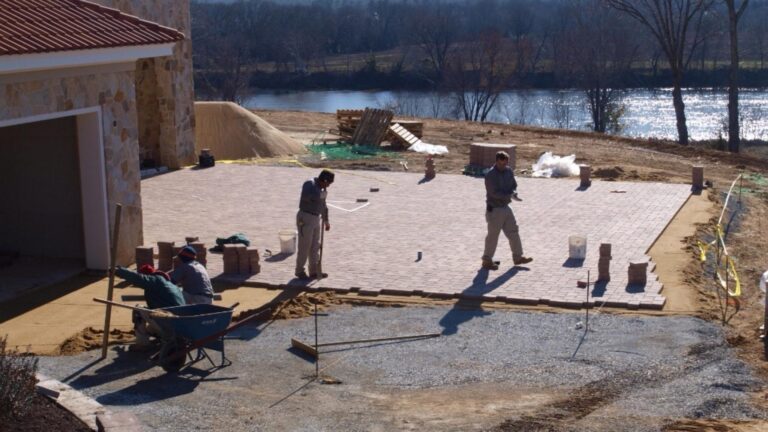
A driveway holds thousands of pounds of vehicle, day after day, which puts it in a different category from a patio or a path. Our leadership holds degrees in horticulture, agronomy, and turf management, so soil behavior is our field. Virginia’s clay swells when it’s wet and moves through freeze-thaw winters, and a driveway laid on a thin base telegraphs every bit of that within a season or two. We excavate deeper, compact in layers, and use pavers rated for vehicle loads, because the part you never see is what decides whether the part you do see stays flat.
-
Service That Stays With You
You won’t get handed off to a stranger halfway through. One point of contact walks your project from the first design conversation to the final walkthrough, and coordinates the schedule around your household so you know when you’ll be parking on the street.
-
The Front of Your Property, Handled as One
Your driveway sits next to the front walk, the entry beds, and the lighting that shows them off after dark. We design and install, so those pieces come together as one approach to the house rather than a set of projects done years apart by different crews. When we plan them together, borders line up, grades match, and lighting wire goes in before the pavers do.
What a Driveway Costs
Every driveway we build is custom, so pricing depends on the square footage, the paver you choose, how much old surface has to come out, and how much excavation and grading the ground needs before base goes down. Site access for equipment, drainage work, and borders or lighting factor in too. A parking pad and a long approach with a turnaround sit at very different points. For a sense of where projects typically land, see our pricing guide.
Instant Price Estimator Tool for
Driveway Installations
Who We Serve

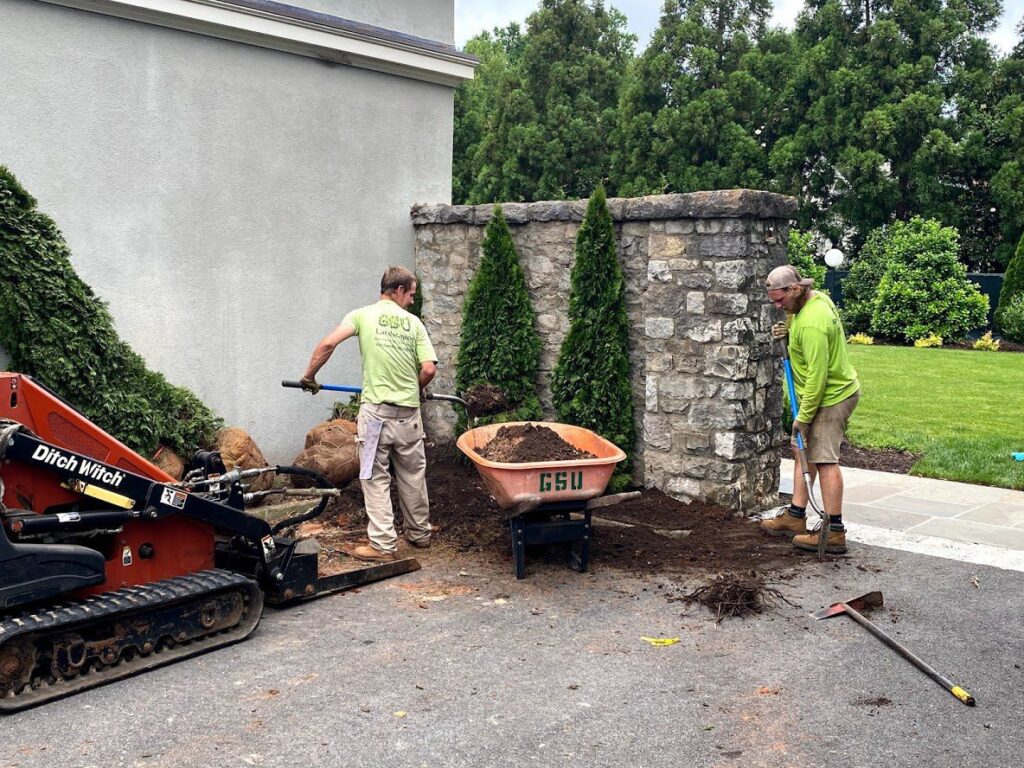
Residential Properties
Serving homeowners looking for luxury-level lawn care.
Churches & Faith-Based Organizations
Trusted to keep grounds consistently welcoming.

Community Spaces
Proud to keep these valuable spaces green and beautiful.


Frequently Asked Questions
Poured concrete and asphalt go down faster and cost less up front. The tradeoff shows up later. Concrete cracks along control joints as the ground shifts, and once it cracks, the repair is a patch that never matches. Asphalt needs resealing every few years and softens in July heat. Pavers cost more at install but flex with ground movement instead of fracturing, and any section that settles can be lifted, re-based, and set back down so the repair disappears. They also give you color, pattern, and border options that poured surfaces can’t. Pavers are what we build, so if you’re set on asphalt or poured concrete, we’ll point you toward a contractor who does that work.
Not when the base is built for it. This is where driveways and patios part ways. A driveway needs a deeper excavation and a thicker compacted aggregate base than a walking surface, compacted in layers rather than all at once, plus thicker pavers rated for vehicle traffic and edge restraints along both sides so the field can’t spread. Cutting depth on the base is the single most common reason a paver driveway develops ruts and dips, and it’s not something you can correct later without pulling the surface back up.
Yes, and it’s one of the more common requests we get. A cobblestone or paver border along an existing concrete or asphalt driveway sharpens the edge, keeps gravel and mulch out of the drive, and gives the whole front of the house a finished line for a fraction of what a full replacement costs. It also pairs well with reworking the beds along the drive. If you like your driveway surface and just want it to look intentional, this is usually the move.
Frequently, yes, on both counts. Where a driveway meets the public road, the apron and any curb cut typically fall under county or state right-of-way rules, and that portion usually needs a permit and inspection. Expanding a driveway’s footprint can also trigger stormwater or impervious surface review depending on your county, whether that’s Henrico, Chesterfield, Hanover, or James City County. Many HOA communities around Midlothian, Glen Allen, and Short Pump want sign-off on material and layout before work starts. We’ll sort out what applies to your address during the site visit and help you prepare what the board or county needs.
A driveway is a large surface that sheds every drop that lands on it, so where that water heads matters. We grade so runoff moves away from the garage and foundation rather than collecting at the low end or running into the street. On lots that need more, we add drainage to carry water to a better outlet, or use permeable pavers that let water pass through the surface and soak into the ground beneath. Permeable systems are worth discussing if your county limits impervious surface or your lot already struggles with standing water.
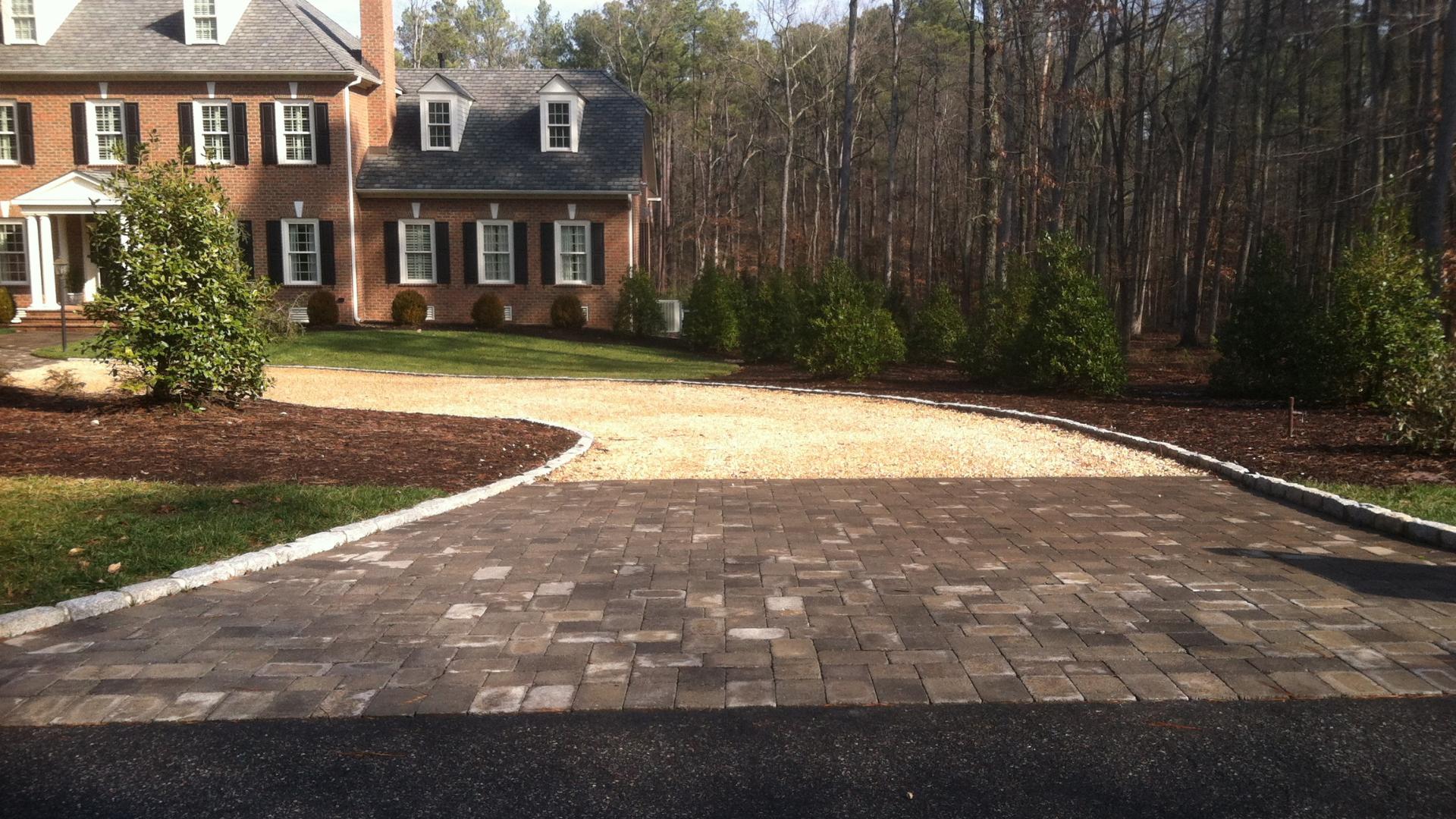
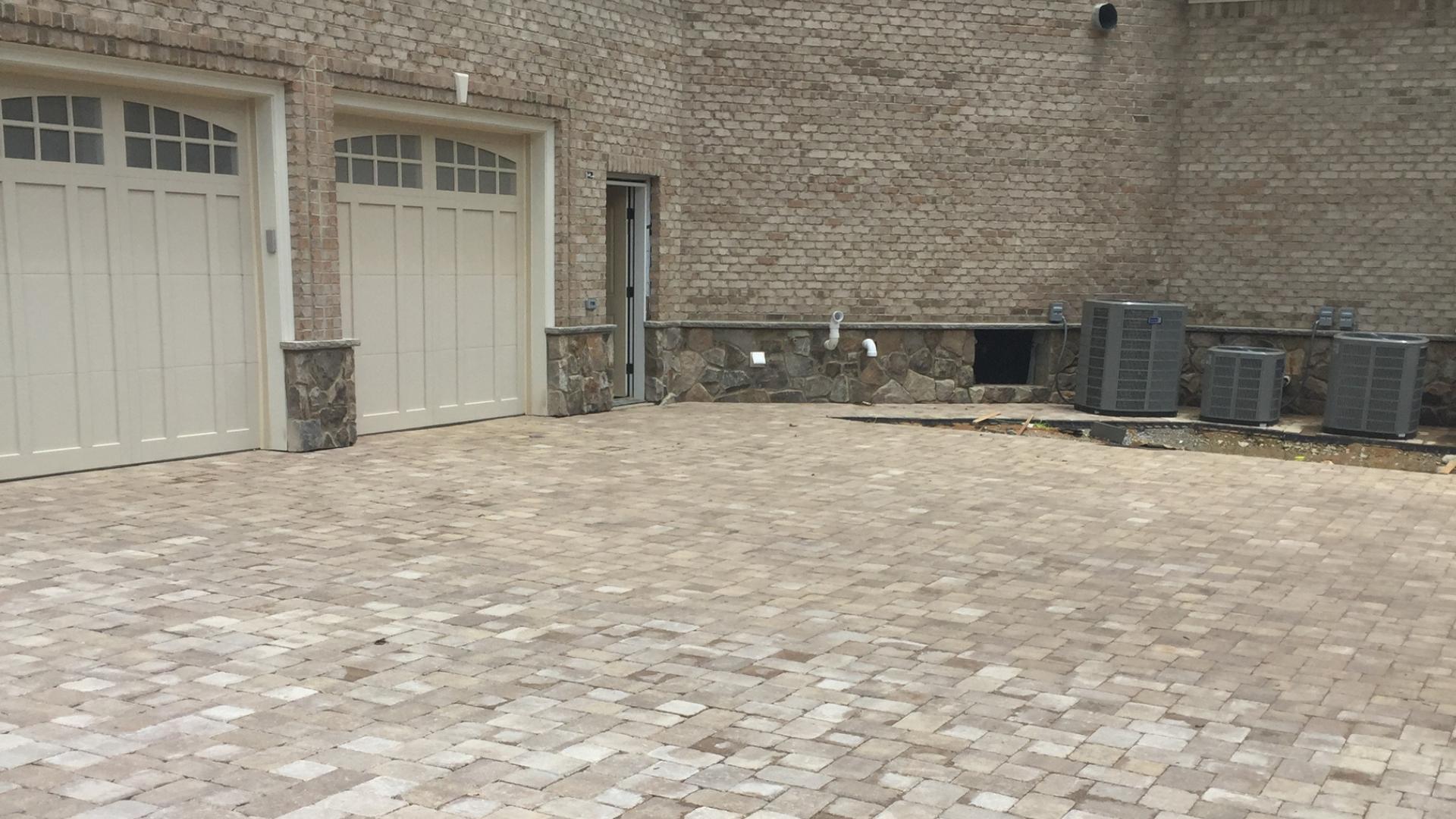
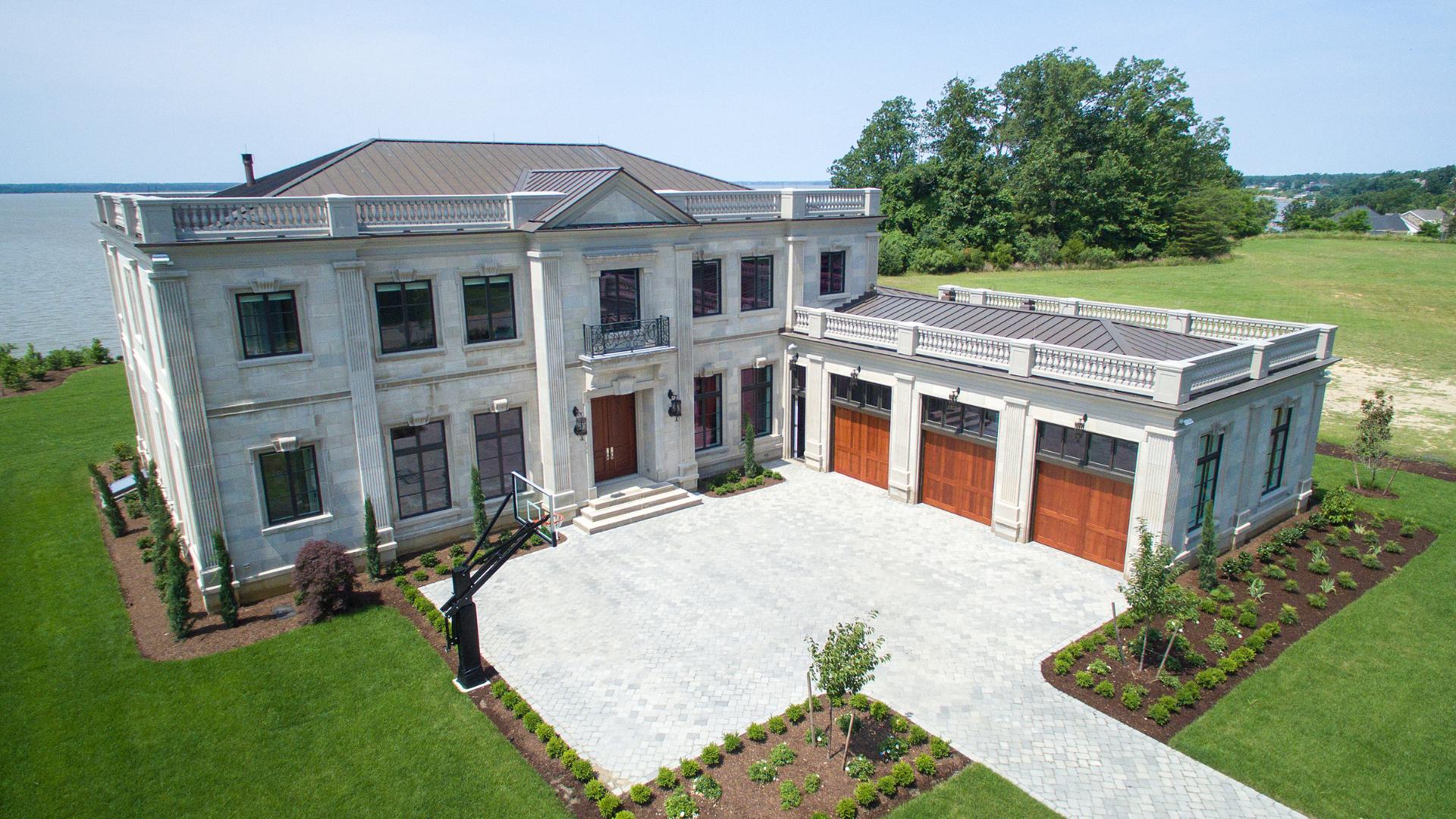
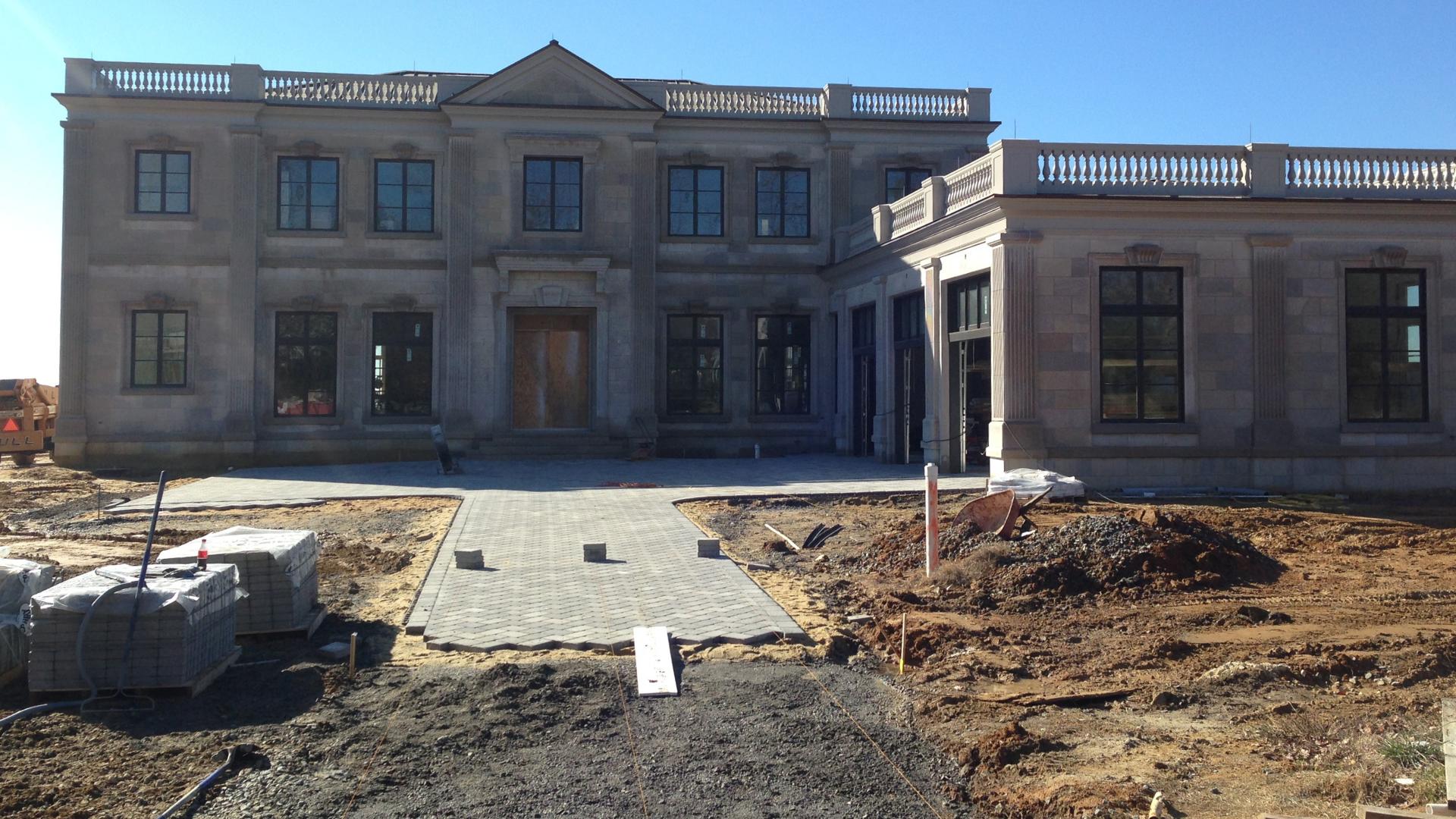
See the Difference: Our Driveway Work


Meet our Sales Team
Exceptional service starts with exceptional people. Set up a visit to meet your project lead.

Bill Gallagher
Owner & Sales Manager
Jim Gallagher
Owner & Sales Manager
Preston Gravatt
RVA: Sales Associate
Our Service Areas
The Central Virginia area is our home, and we're proud to do our part to keep it green and beautiful. Our service areas include:
The Richmond, Virginia, area:
Richmond, Virginia, neighborhoods:
Don’t see your area listed? No problem!
Call (804) 514-4610 to learn whether your location is within our reach.

The Central Virginia area is our home, and we're proud to do our part to keep it green and beautiful. Our service areas include:
The Williamsburg, Virginia, area:
Williamsburg, Virginia, neighborhoods:
Don’t see your area listed? No problem!
Call (757) 903-5063 to learn whether your location is within our reach.

Related Resources

Advantages of Paver Patios
February 16, 2023
How Much Does a Paver Patio Cost in Central Virginia?
June 18, 2026
Why Might Green Side Up Cost More?
May 27, 2026